
Last updated
How fast can you get restrooms out after a storm hits Baton Rouge?
Speed is the whole job during disaster response. We stage standard porta potty rental units and keep drivers ready because floodwater does not wait for a normal delivery window, and neither do we. Most emergency drops in Baton Rouge happen same day or next day depending on road access and how many units you need. If a shelter, a church camp, or a staging yard needs sanitation fast, our emergency porta potty rental line moves ahead of routine scheduling.
Access is the real bottleneck, not the units themselves. A roll-off delivery needs about 60 feet of straight clearance behind the truck, and that same clearance rule matters for restroom trailer drop-off when roads are half blocked by debris or downed limbs. We route around closures out toward Westminster, 4.3 miles southeast, or Merrydale, 5.5 miles north, when the direct path into a neighborhood is impassable. If your site has damaged pavement, standing water, or a narrow gravel lane, tell us before the truck rolls so we bring the right unit for portable toilet rental instead of turning drivers around.
For larger relief operations, a restroom trailer rental gets people off single-stall units and into something closer to normal, especially for responders working long shifts. We also bring temporary fence rental to secure staging areas and supply drops, because disaster sites draw foot traffic fast.
What sanitation do shelters and relief camps actually need?
Shelters need toilets, handwashing, and water, and the ratio depends on headcount, not guesswork. OSHA 1926.51(c)(1) sets the baseline most relief coordinators use anyway: one toilet facility for 20 workers or fewer, then one toilet seat and one urinal per 40 workers as the group grows past that, dropping to one per 50 once you cross 200 people. That standard was written for construction crews, but it is the number relief logistics teams reach for when nothing city-specific applies. Pair it with our how many porta potties do i need guide to size a camp correctly before trucks start rolling.
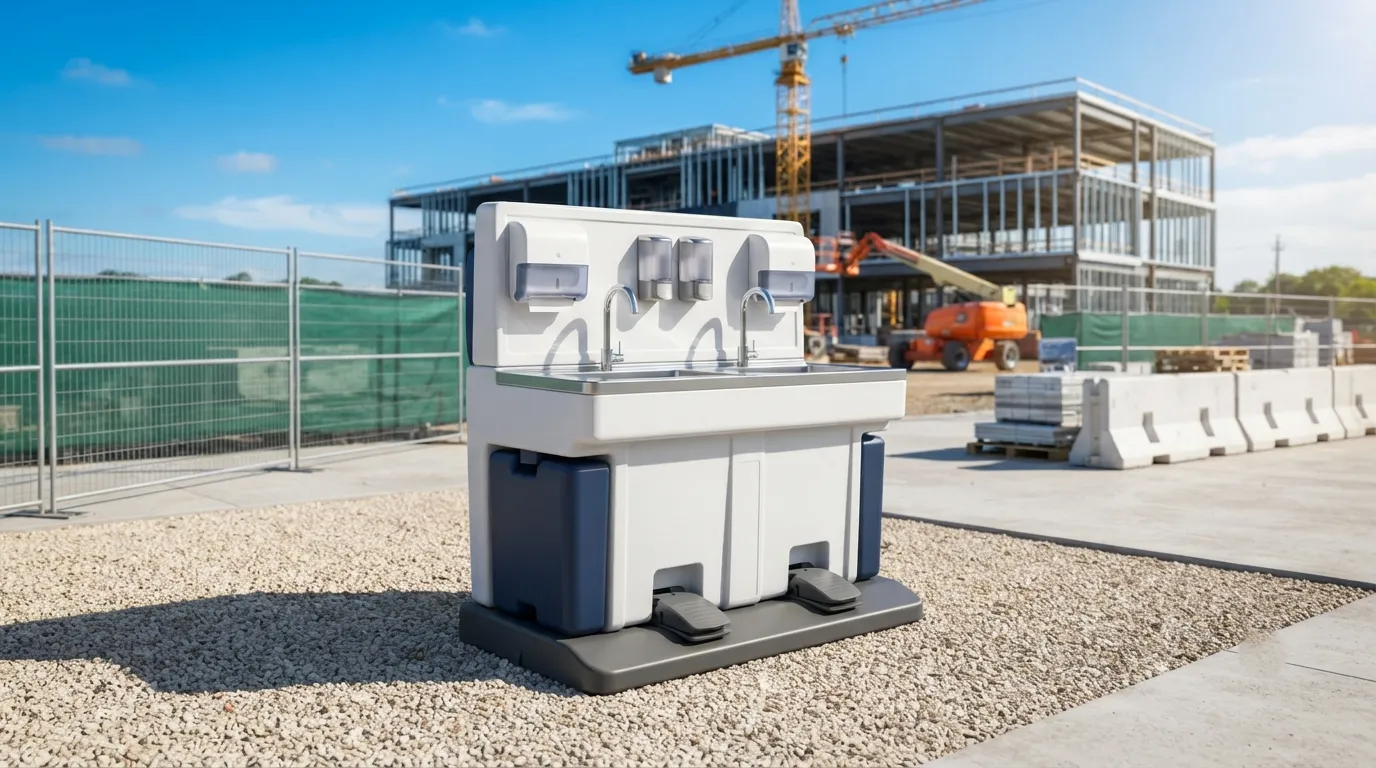
Water matters as much as toilets. OSHA 1926.51(a)(1) requires an adequate supply of potable water at any workplace, and a relief camp functions the same way. We pair toilet units with handwashing station rental setups, and 29 CFR 1910.141(d)(2) requires soap and towels or a hand-drying device at washing stations, not hand sanitizer alone. If your camp needs a simpler option between full stations, our hand sanitizer station rental works for supplemental coverage but should not replace real handwashing.
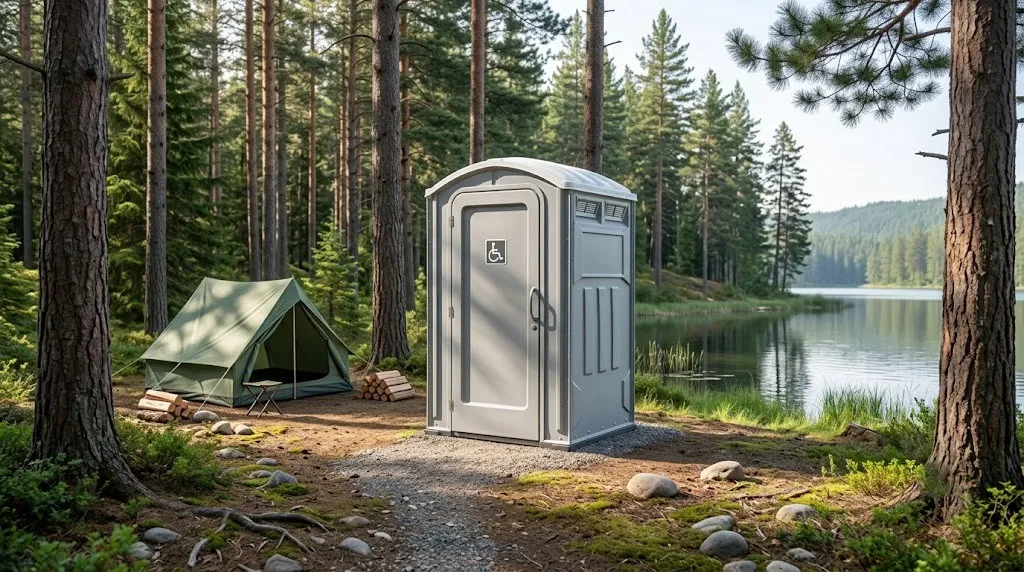
Accessibility does not get skipped during a disaster response. ADA Standards section 213.2 requires that at least 5 percent of clustered single-user units be accessible, never fewer than one, and our ada accessible porta potty units meet that clearance. Displaced residents include elderly people and people with mobility limits, and shelters in Baton Rouge that skip this step usually get flagged fast.
Do you handle septic backup and holding tanks during flood recovery?
Yes. Flooded septic systems are common after heavy rain events, and we run emergency pump-outs alongside our regular septic pumping service schedule. A typical residential tank holds around 1,000 gallons and gets pumped every 3 to 5 years under normal conditions, but flood infiltration can force an out-of-cycle pump long before that window. Our emergency septic service line handles exactly that call.
If a home or facility in Baton Rouge loses septic function entirely during recovery, a holding tank rental bridges the gap until the system gets inspected and repaired. We have also supported grease interceptor overflow at commercial kitchens feeding relief workers; a grease interceptor needs pumping once fats, oils, grease and solids reach 25 percent of the liquid depth, and our grease trap pumping crews handle that separately from septic work. For debris cleanup running alongside sanitation, a roll-off dumpster rental or construction dumpster rental clears storm debris without waiting on a separate hauler.
We also serve outlying areas fast: Inniswold sits 5.5 miles southeast, Gardere is 8.6 miles south, and Central is 12.2 miles northeast, so relief camps set up in any of those spots are well within same-day range.
How much does emergency porta potty rental cost during a disaster?
Standard units run $100 to $350 a day depending on volume and urgency, higher than routine rental because emergency logistics cost more to staff. Check porta potty rental cost for full pricing context, and expect delivery fees on top for expedited routing.
Can you deliver to a shelter with no paved access?
Often, yes, but tell us about ground conditions first. Gravel, mud, or narrow lanes change which unit and truck we send. Call ahead so the driver arrives with the right setup instead of turning back.
Do disaster relief units need daily servicing?
Higher-traffic units need more frequent service than the standard weekly interval used for typical job sites. Shelters and camps usually need service more than once weekly given the user count involved.
Are ADA units available for emergency deployment?
Yes. We keep ADA-compliant units in rotation for exactly this reason. ADA Standards section 213.2 sets the minimum ratio, and we can prioritize accessible units for shelters with elderly or mobility-limited residents.
What if we need restrooms for weeks, not days?
Long-term relief operations shift to weekly or monthly rates instead of daily emergency pricing. See monthly porta potty rental for that structure once the immediate crisis phase passes.
Next step
Get a delivery date
Tell us the address, the dates and the headcount. We size the order and confirm the route.