
Last updated
How much does grease trap pumping cost?
Pricing runs by tank size and how often you need service, not a flat number. Septic and grease work on the same truck falls in the $150 to $300 day-rate range, with a lighter weekend call landing between $50 and $150. Set a schedule instead of waiting for a backup, and you avoid the emergency premium entirely, the same logic that drives our monthly porta potty rental customers to lock in a standing schedule instead of one-off calls. Restaurants near construction site services staging areas, and kitchens tied to event restroom rental setups for catered functions, often bundle grease pumping with septic visits to save a trip charge. If you are budgeting for a standalone septic job, septic tank pumping cost breaks that down separately, and septic pumping service covers the full scope of what we handle beyond grease.
| service | duration | low | typical | high |
|---|---|---|---|---|
| septic/grease | day | $150 | $250 | $300 |
| septic/grease | weekend | $50 | $100 | $150 |
Why does my grease trap need pumping so often?
Grease hardens fast in a warm kitchen, and Baton Rouge humidity does not help. The 25 percent rule is the industry benchmark: once solids and fats fill a quarter of the tank's liquid depth, flow slows and odors start working back up the line. A trap that is never pumped backs up into floor drains, which shuts down a kitchen faster than almost anything else in the building. We see this most in older buildings near downtown Baton Rouge, where original plumbing was never sized for current volume, much like the aging fixtures we run into on home renovation porta potty jobs across the same neighborhoods. If your issue is closer to a home septic system than a commercial trap, septic tank warning signs covers the symptoms, and how often to pump a septic tank explains the 3 to 5 year residential interval, which is a different clock than a commercial grease trap runs on.
Do I need emergency grease trap pumping?
Yes, if the trap is backing up into a floor drain, sink, or dish pit during service hours. That is not a next-week problem. Call for emergency septic service and we will get a truck routed same day where possible, the same dispatch process behind our emergency porta potty rental line. Emergency grease trap pumping usually costs more than a scheduled visit, so a standing weekly or biweekly contract is the cheaper long-term move for any kitchen doing real volume. Restaurants near Westminster, about 4.3 miles southeast of downtown Baton Rouge, and kitchens out toward Inniswold, 5.5 miles southeast, are both inside our normal service radius for same-day response. We also handle grease pumping alongside other site needs: job trailers running a handwashing station rental for crew meals, a food vendor at a fairground working with county fair restrooms and needing overflow tank service on the same visit, a caterer at a wedding restroom rental setup, or a mobile kitchen parked next to a storage container rental unit for dry goods.
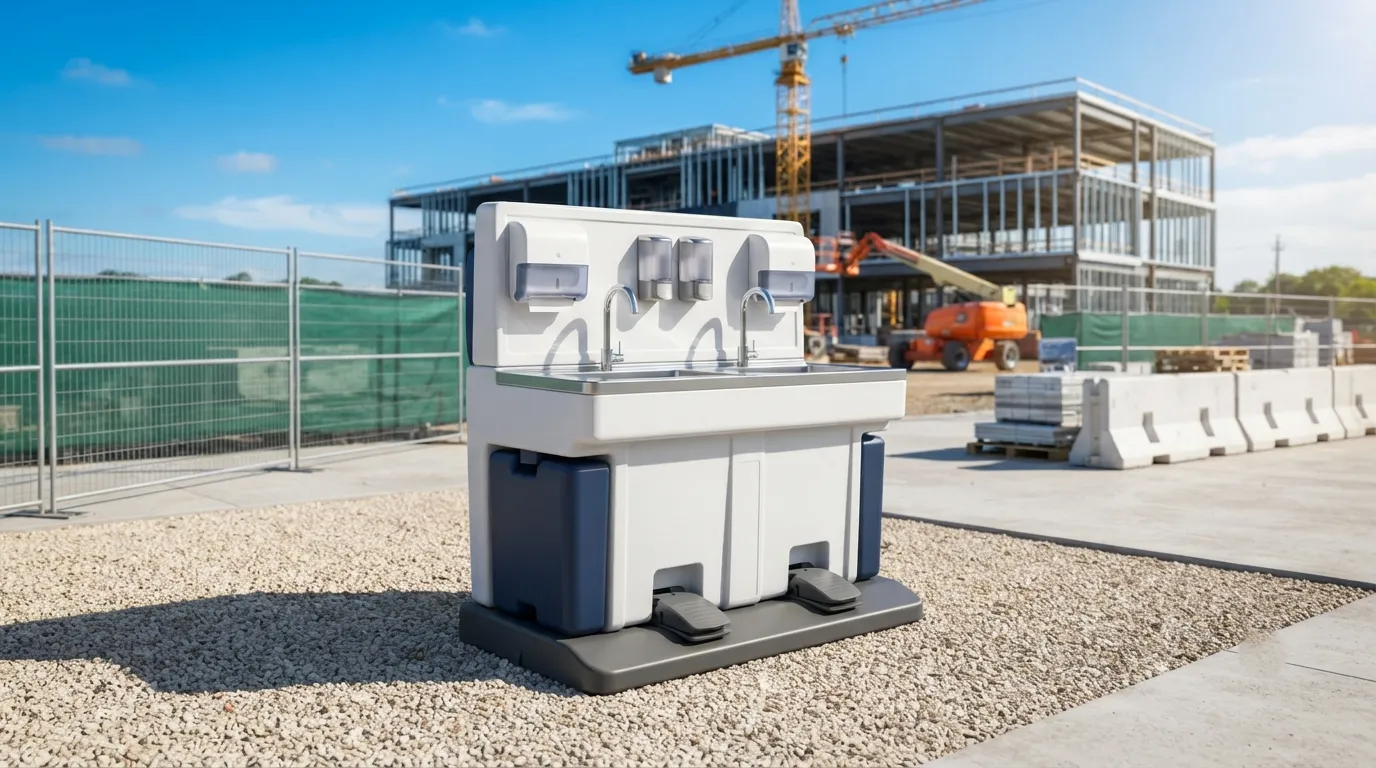
Commercial kitchens fall under general sanitation rules the same way construction sites do under OSHA 1926.51(c), and while that citation governs toilet counts rather than grease traps, the same inspection mindset applies: a facility that lets waste systems run past capacity is a facility waiting on a shutdown notice. Handwashing after certain contaminant exposure falls under OSHA 1926.51(f)(1), which is a construction-site rule, not a restaurant rule, but any kitchen adding portable handwash stations for outdoor prep or catering should still route water and drainage properly, and a portable sink rental or hand sanitizer station rental can cover that gap without tying into fixed plumbing.
How often should a restaurant pump its grease trap?
Most full-service restaurants need pumping every 4 to 8 weeks; high-volume fryers or grills push that to every 2 to 4 weeks. Track fill depth rather than guessing, the same discipline we push on how many porta potties do i need planning for a job site. A trap left past the 25 percent mark risks slow drains, odor complaints and a possible closure notice from local health inspectors.
What size grease trap do most kitchens need?
Size depends on seating count and kitchen output, not just floor space. Undersized traps get pumped constantly and still fail. We size the pumping schedule to your actual trap, not a generic interval, after the first service visit confirms fill rate, similar to how we size a 10 yard dumpster rental or 20 yard dumpster rental to actual debris volume rather than guessing.
Can you handle both grease trap and septic pumping on one visit?
Yes. Many Baton Rouge properties run a grease trap and a septic tank on the same lot, and we route both jobs together when schedules line up. Ask about combined visits when you book to cut down on separate service fees, the same bundling logic behind pairing a roll-off dumpster rental with a cleanup job.
Is emergency grease trap pumping available on weekends?
Yes, weekend and after-hours calls are handled, priced at a premium over the scheduled day rate. If a backup happens mid-shift, call immediately rather than trying to run the kitchen around it. Standing water in a floor drain gets worse fast, much like a job site running past its planned porta potty rental per day window without a backup unit staged.
Do you serve areas outside Baton Rouge for grease trap pumping?
Yes. Our trucks reach Central, 12.2 miles northeast, and Zachary, 19.1 miles north, along with closer towns like Gardere and Oak Hills Place. Check service areas or porta potty rental in Baton Rouge for the full coverage map and contact details.
Next step
Get a delivery date
Tell us the address, the dates and the headcount. We size the order and confirm the route.