
Last updated
How many restrooms does a farm operation need?
Start with headcount, not acreage. OSHA 1928.110 sets field sanitation at one toilet and handwashing setup per 20 hand-labor employees, and the walk to reach it can't exceed a quarter mile, which matters on a spread-out row-crop or orchard operation. Baton Rouge farms running seasonal picking crews or long harvest days often need two or three standard units just to keep every crew within that quarter-mile line, not one unit parked at the barn. Pair each toilet with water and a wash station, since OSHA 1926.51(a)(1) requires potable water at any place of employment, farm fields included. If your crew handles pesticide or herbicide application, washing facilities are required under OSHA 1926.51(f)(1), and a jug of sanitizer doesn't cover it. We'll walk the property with you, figure out where the crews actually work, and place units so nobody's losing ten minutes of picking time walking back to the truck. A lot of Baton Rouge operations also run cattle or hay ground alongside row crops, so we size the order around whichever crew is largest that week, not a flat number. Ask about our monthly porta potty rental if the season runs long, since day rates stack up fast against a month-long commitment.
What restroom options work on farmland?
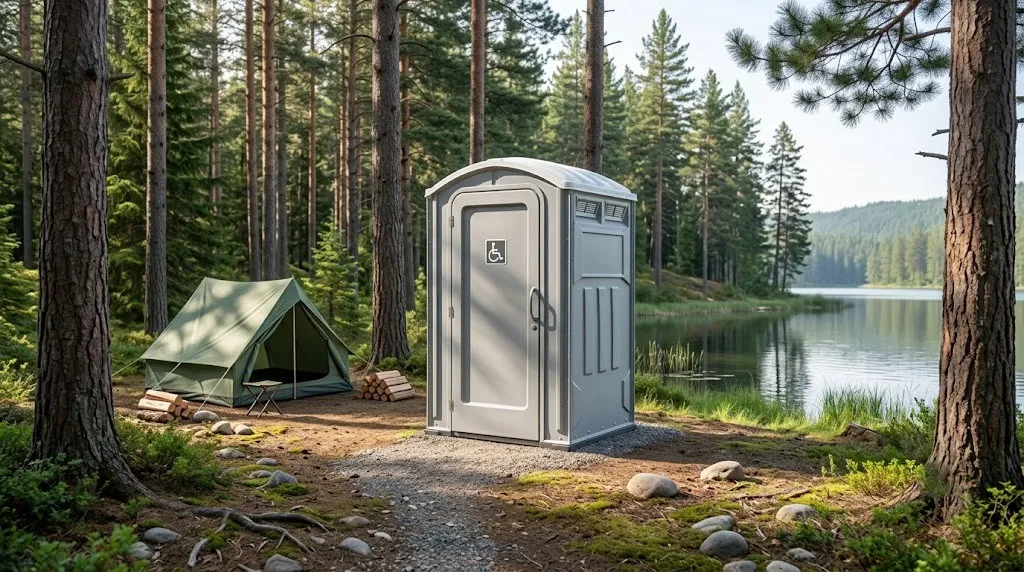
A standard porta potty with its 60 to 70 gallon holding tank is the workhorse for row crops, hay fields and packing sheds, standing about 92 inches tall on a 44 by 48 inch footprint that fits on a headland or gravel pad without trouble. For crew leads, farm office staff or anyone who needs a hand-washable option, a deluxe flushable unit is worth the upgrade. If you've got a worker who needs accessible facilities, an ADA accessible porta potty meets ADA Standards section 213.2, which requires at least one accessible unit in any cluster, and it's built around a 60 inch turning circle per ADA Standards section 304.3.1 so a wheelchair can actually turn around inside. For larger operations running a packing house or a seasonal labor camp, a restroom trailer or a 2 stall restroom trailer gives you real handwashing and better comfort for a crew that's there twelve hours a day. Farms near Baton Rouge that also run on-site septic for a farmhouse or bunkhouse should keep an eye on tank service too. A typical residential septic tank needs pumping every 3 to 5 years depending on tank size and household count, and our septic pumping service handles that on the same visit if you want to bundle it with restroom delivery.
Where should farm restrooms go on the property?
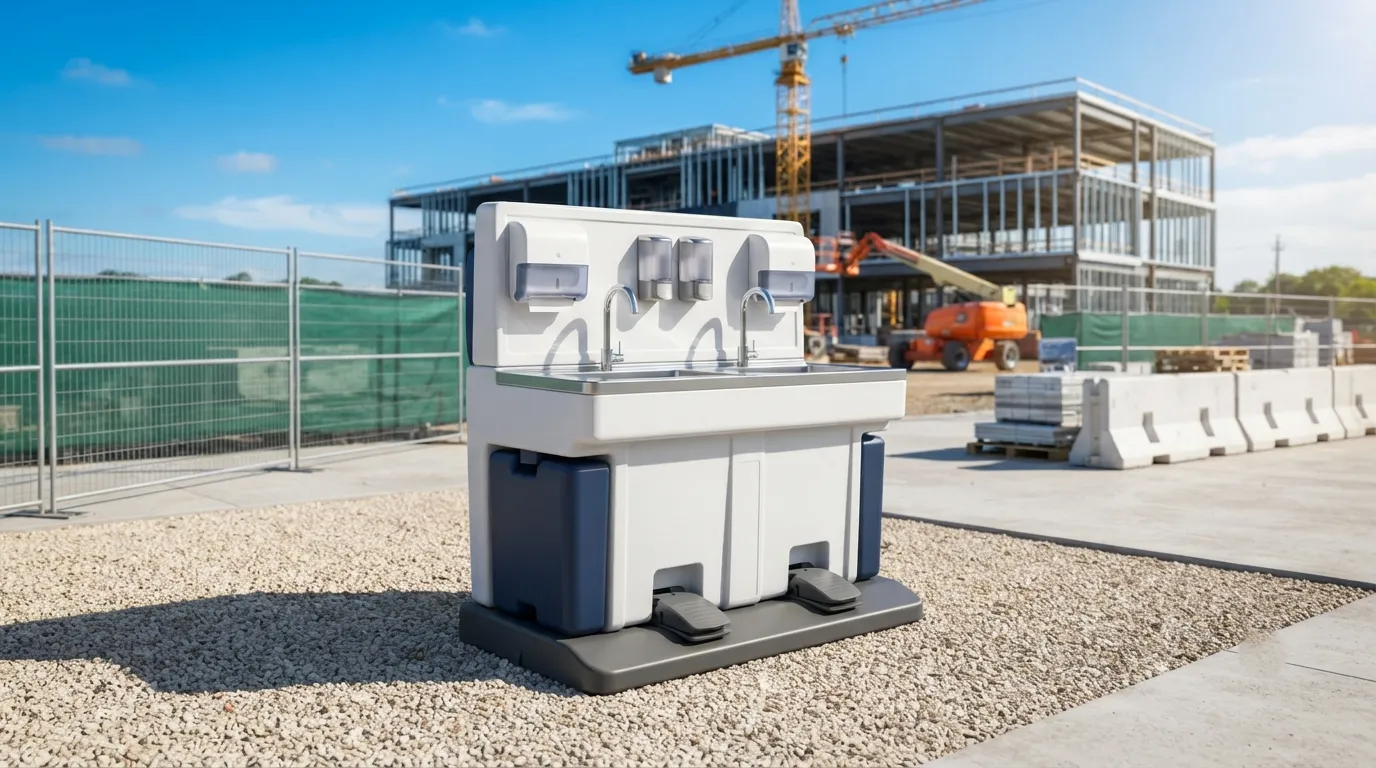
Placement comes down to two things: truck access and worker walk distance. Delivery trucks need about 60 feet of straight clearance to set a unit down safely, so gravel pads, gate entrances or the edge of a mowed field work better than deep interior rows. Keep units on stable, level ground, similar to the firm-surface standard in ADA Standards section 302.1, since a unit sinking into wet field ground after a rain becomes a service problem fast. Spread units across the property rather than clustering them at one entrance if your crews are spread over more than a quarter mile, since that's the walking limit under OSHA 1928.110. Baton Rouge sits in a humid, rain-heavy part of Louisiana, so drainage matters more here than in drier regions; a pad that floods after every storm isn't worth the shorter walk. If you're running seasonal labor camps or migrant housing on the property, add a handwashing station rental near the restroom cluster, since 29 CFR 1910.141(d)(2) requires soap and towels or a drying device, not just sanitizer gel. For farms closer to town, we're already running routes through Central, about 12.2 miles northeast of Baton Rouge, and up toward Zachary, 19.1 miles north, so service timing on rural routes is usually predictable. Check our service areas page if your acreage sits outside town.
How often do farm porta potties get serviced?
Weekly service is the baseline for up to 10 users over a standard 40-hour week, per the ANSI/PSAI Z4.3 sanitation standard. Larger crews or peak harvest weeks usually need twice-weekly visits. We build the schedule around your actual crew size, not a flat calendar.
Do farm restrooms need to be ADA accessible?
If you employ workers who need accessible facilities, yes. ADA Standards section 213.2 requires at least one accessible unit in any cluster of portable toilets, even a small one. Ask us to include an ADA accessible porta potty in your order.
Can I rent restrooms for just harvest season?
Yes. Most Baton Rouge farms rent for the weeks or months of active harvest rather than year-round. A monthly porta potty rental usually costs less per week than repeated short-term orders, so tell us your harvest window up front.
What size crew needs more than one unit?
Once you pass 20 hand-labor workers, OSHA 1928.110 calls for additional facilities, and the quarter-mile walk rule often forces a second unit even sooner if your crew works spread-out fields.
Does field placement need a permit?
Placement on private farmland generally doesn't trigger the same permitting as roadside or public right-of-way placement. If any unit sits near a public road, confirm with the city first; check our porta potty permit requirements page before you commit to a spot.
Next step
Get a delivery date
Tell us the address, the dates and the headcount. We size the order and confirm the route.